
Crowns and prosthodontics
Crowns for damaged teeth, implant-supported restorations and preparatory procedures. Compare their purpose and explore the stages of tooth restoration.
About Service
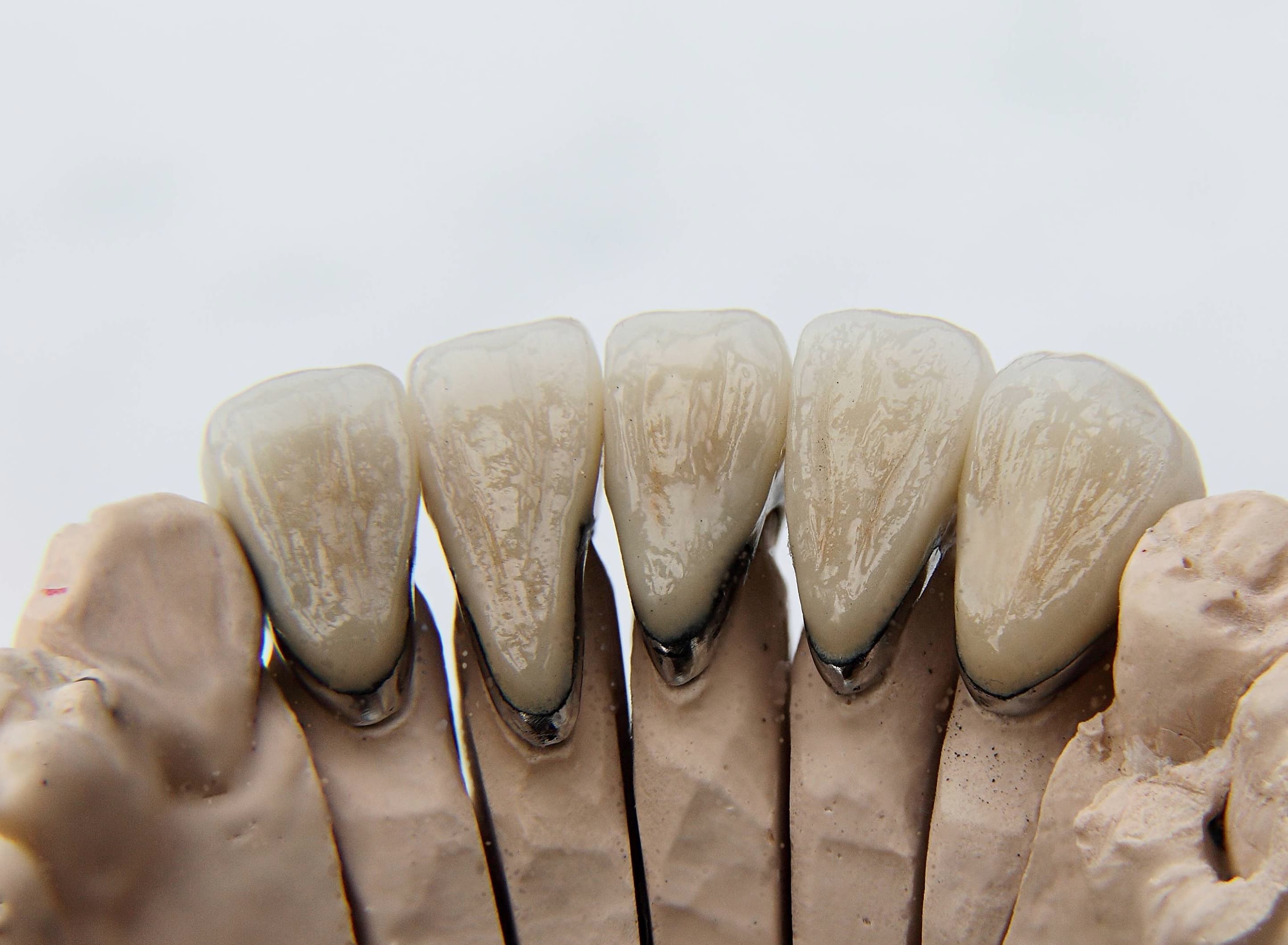
A crown covers a remaining tooth or forms part of an implant restoration. A bridge replaces a span of teeth and may be supported by implants. Selection depends on the supporting structures, bite and ability to clean the restoration, not appearance alone.
Preparation may include dental models, temporary restorations and diagnostic tooth-shape modelling. The material and treatment stages are agreed before the definitive prosthesis is made.
Important considerations
- Crowns and bridges need cleaning and follow-up; chipping, loosening and repair or replacement may be necessary.
- Preparation of a natural tooth for a crown is irreversible.
Information helps prepare for a consultation and does not replace an individual diagnosis. The dentist determines the procedure, materials and timing after assessment.
Service Categories
Crowns on natural teeth
Restoring a damaged or weakened natural tooth with a custom crown. Material selection considers remaining tooth structure, the bite and aesthetic requirements.
Temporary crowns
An interim restoration while a definitive crown is being prepared. Options are available for natural teeth and for MegaGen and Straumann implants.
Implant-supported crowns
Restoring the visible tooth on an existing dental implant. The crown material and connecting components are selected for the implant system and clinical situation.
Implant-supported bridges
Replacement of several missing teeth with a bridge supported by implants. Planning determines the number of supports, the span and the materials.
Diagnostic tooth-shape wax-up
A preliminary model of planned restorations for discussing prosthodontic treatment. It helps communicate the proposed design but does not guarantee the exact final outcome.
Dental crown removal
A preparatory stage when an existing crown needs to be removed as part of treatment. The dentist first assesses the cause of symptoms and future restorative options.
Indications
- A weakened or extensively damaged tooth that can be restored.
- Missing teeth where an implant-supported restoration has been selected.
Contraindications
- Untreated disease affecting supporting teeth, gums or peri-implant tissues requires assessment and preparation.
- Supporting teeth and tissues need to be assessed before selecting a restoration.
Advantages
- Restoration of tooth shape and chewing function.
- Different materials and designs to suit the clinical situation.
Ready to take the first step towards a perfect smile?
Book a consultation right now. Our specialists will conduct an examination and suggest an optimal treatment plan.